A night-by-night plan built around your baby and your life - and updated as they grow.
Take the 3-min quiz →No card. No signup. See what's going on with your nights first.
The part no one warned you about
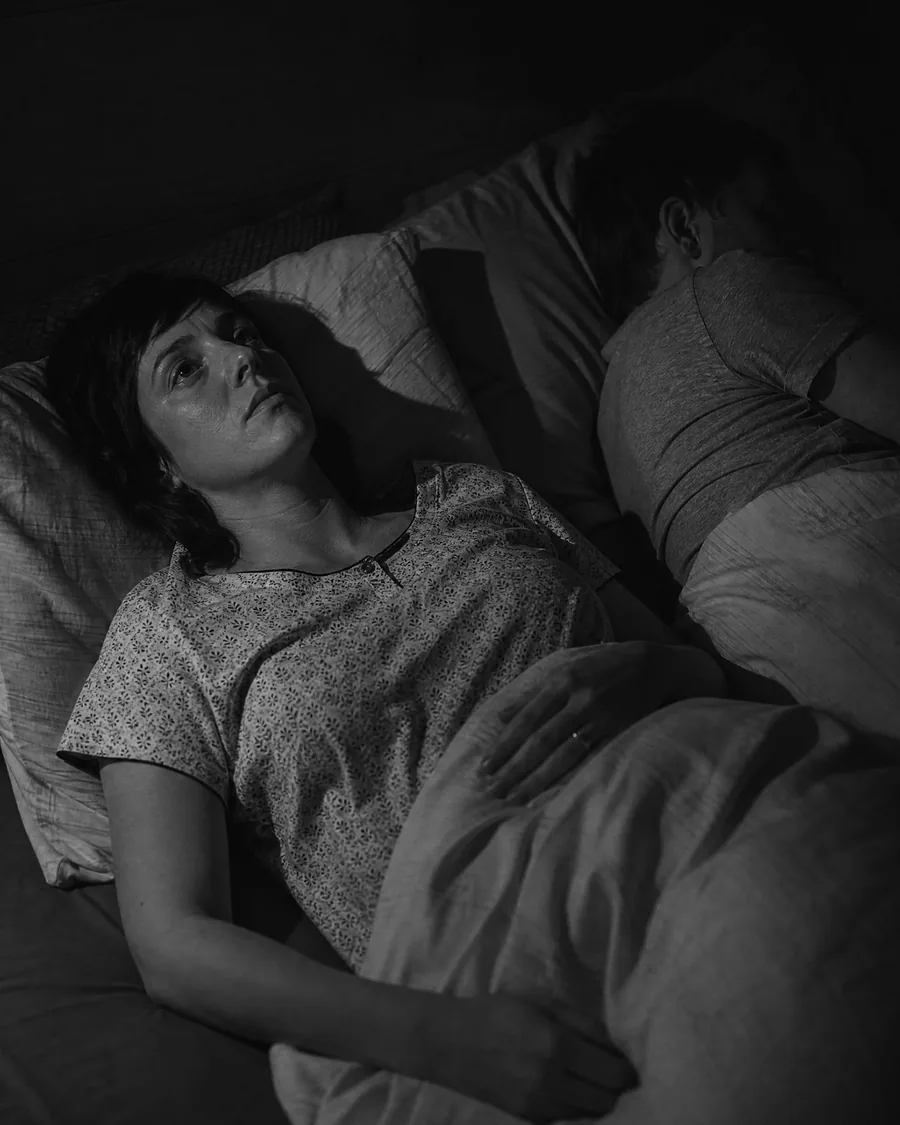
Your body wakes at 2:47am whether or not she does.
You read the same sentence four times and still couldn't say what it said.

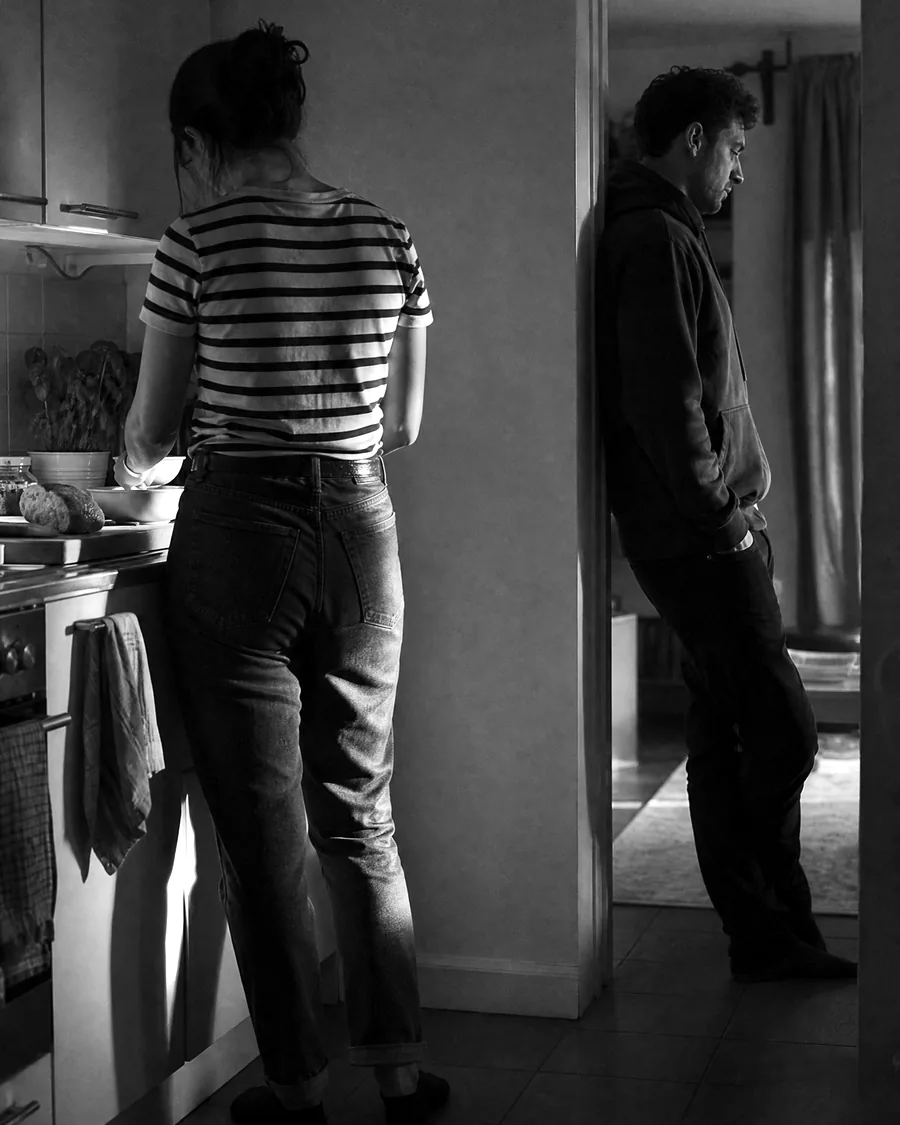
Then you snapped at him. Over the dishwasher.
And at 4am you're awake anyway, going over it.

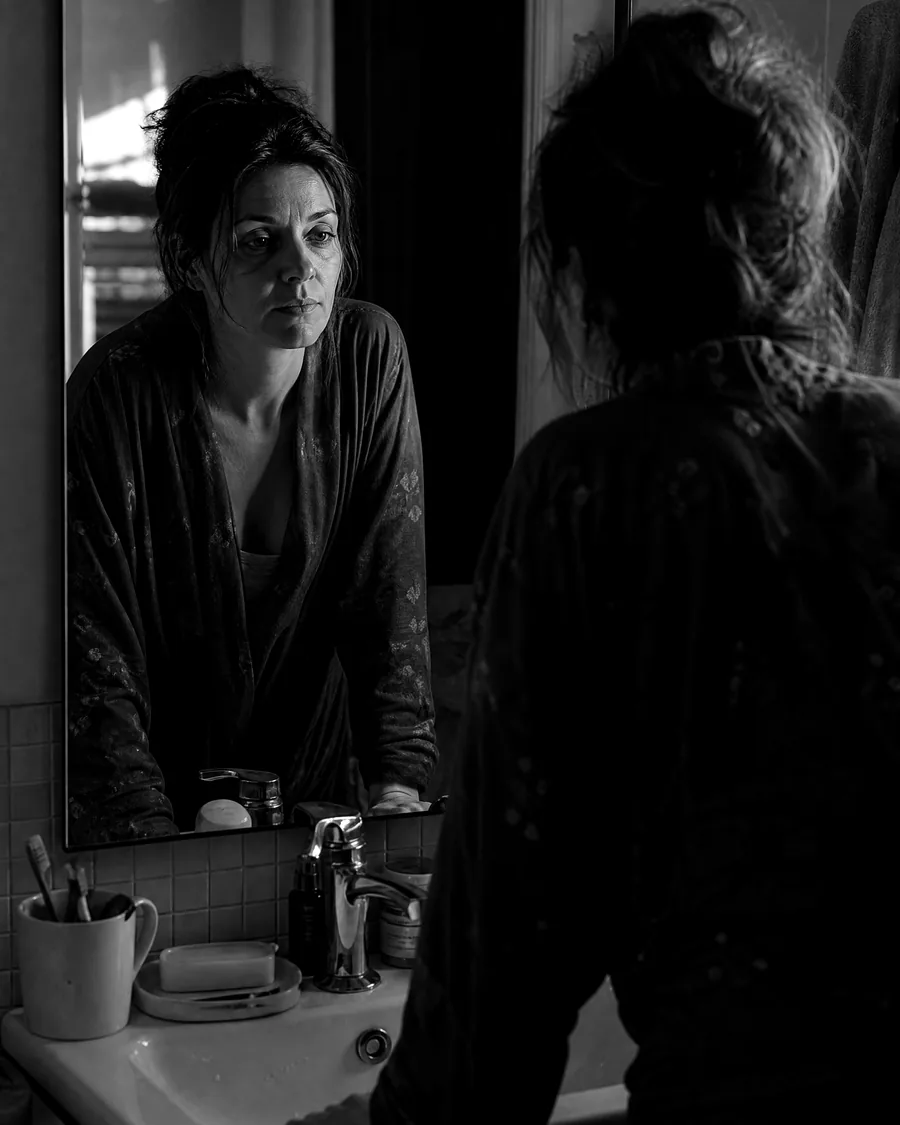
Somewhere around month five, you stopped recognising the person doing all this.
None of this means you're doing it wrong. No one gave you a plan that fits your nights.
That's the part that can change.
See what's going on with your nights →Not a chart to interpret. Not a PDF. One screen a day with your baby's actual times on it.
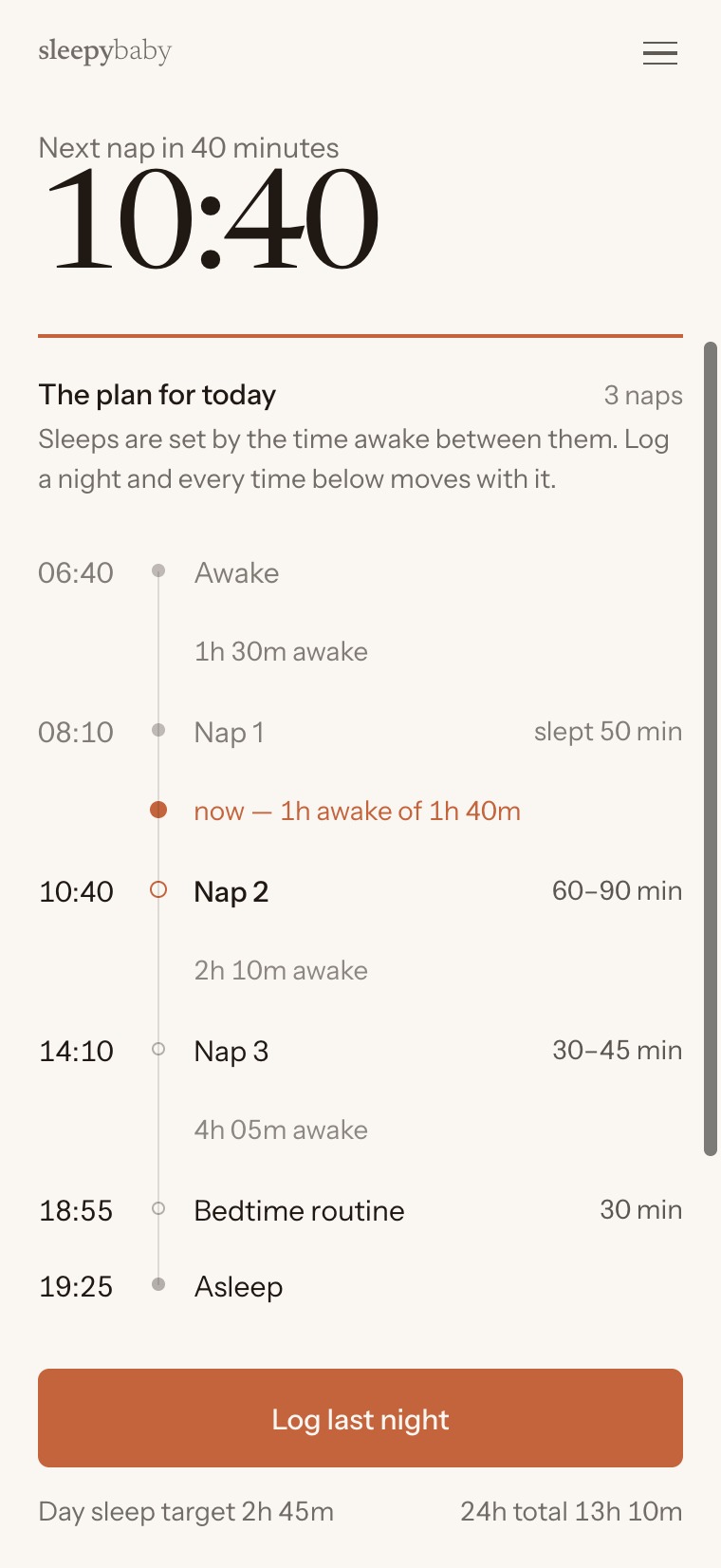
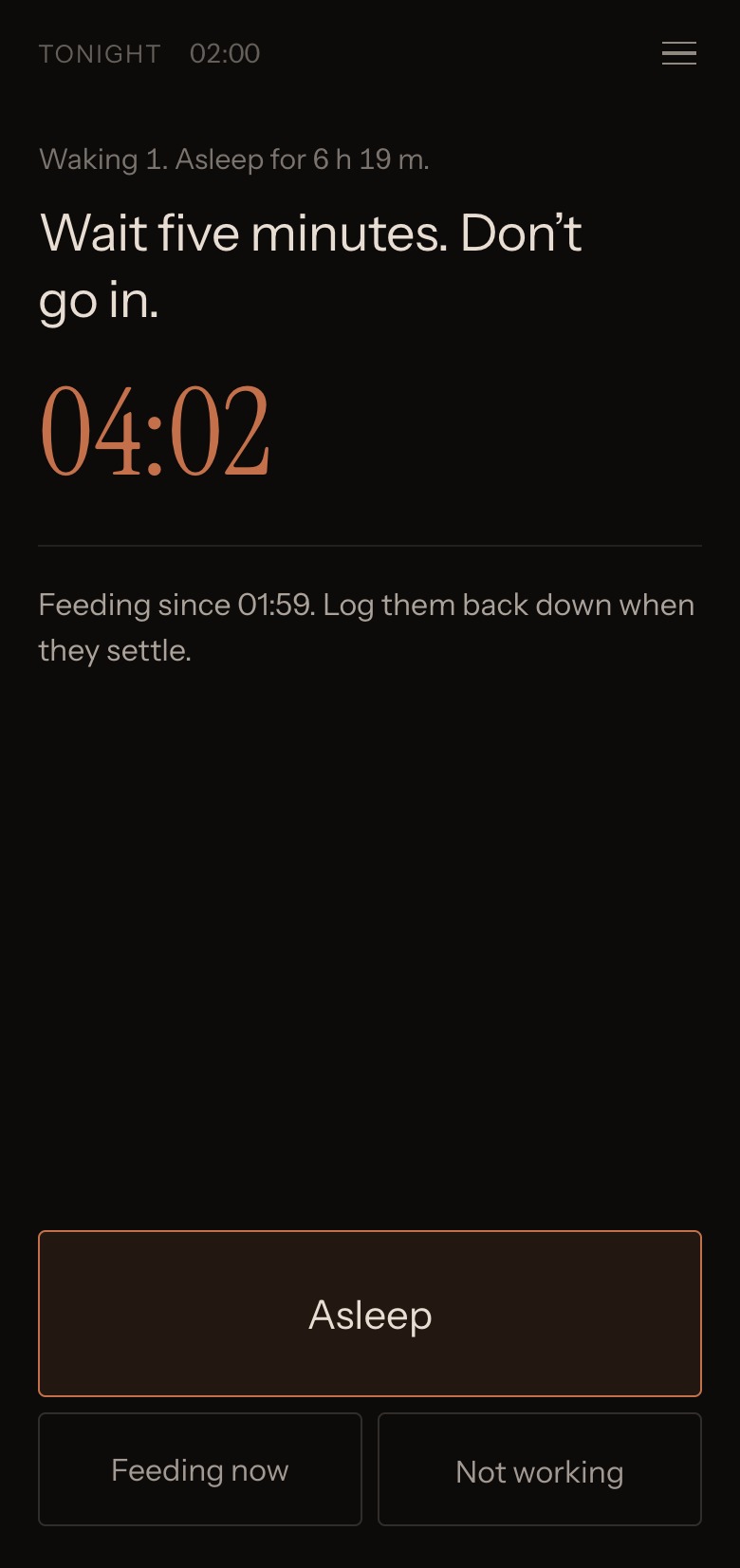
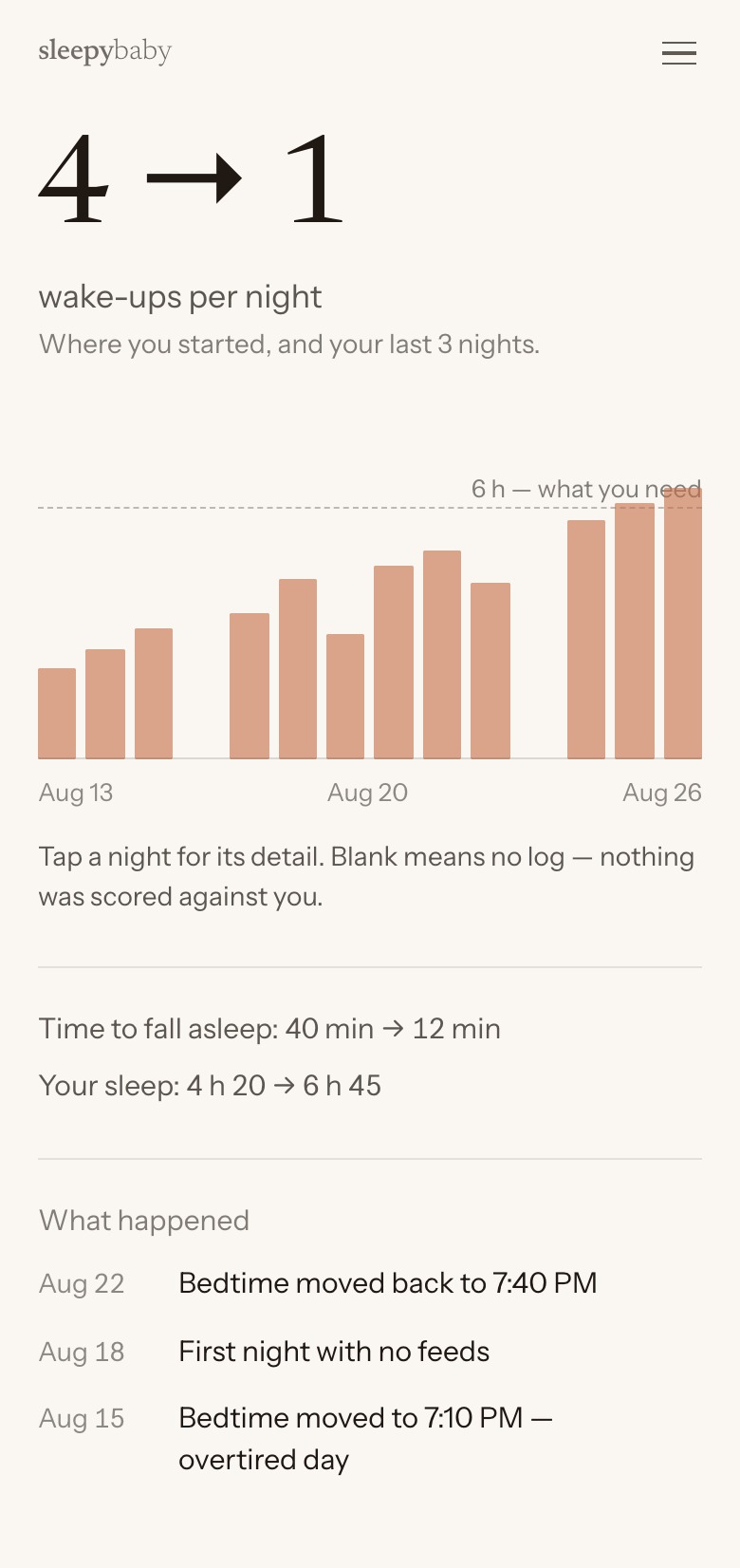
Every time on that screen is calculated from your baby's exact age and what time they woke up this morning.
Take the 3-min quiz →Thousands of nights already re-planned.Built with parents like you, from the first night.

It's that you finish a thought.

That your coffee is still hot when you drink it.

That you laugh at something small, and it isn't forced.
It starts with the nights. The rest tends to follow.

You wake up and it's already light out.

You answer your partner instead of snapping at him.

You make a plan for Saturday and actually want to go.
How it works

Three minutes of questions about your nights, your work, who else is up, and how much you have left. The baby's schedule is only half of it.
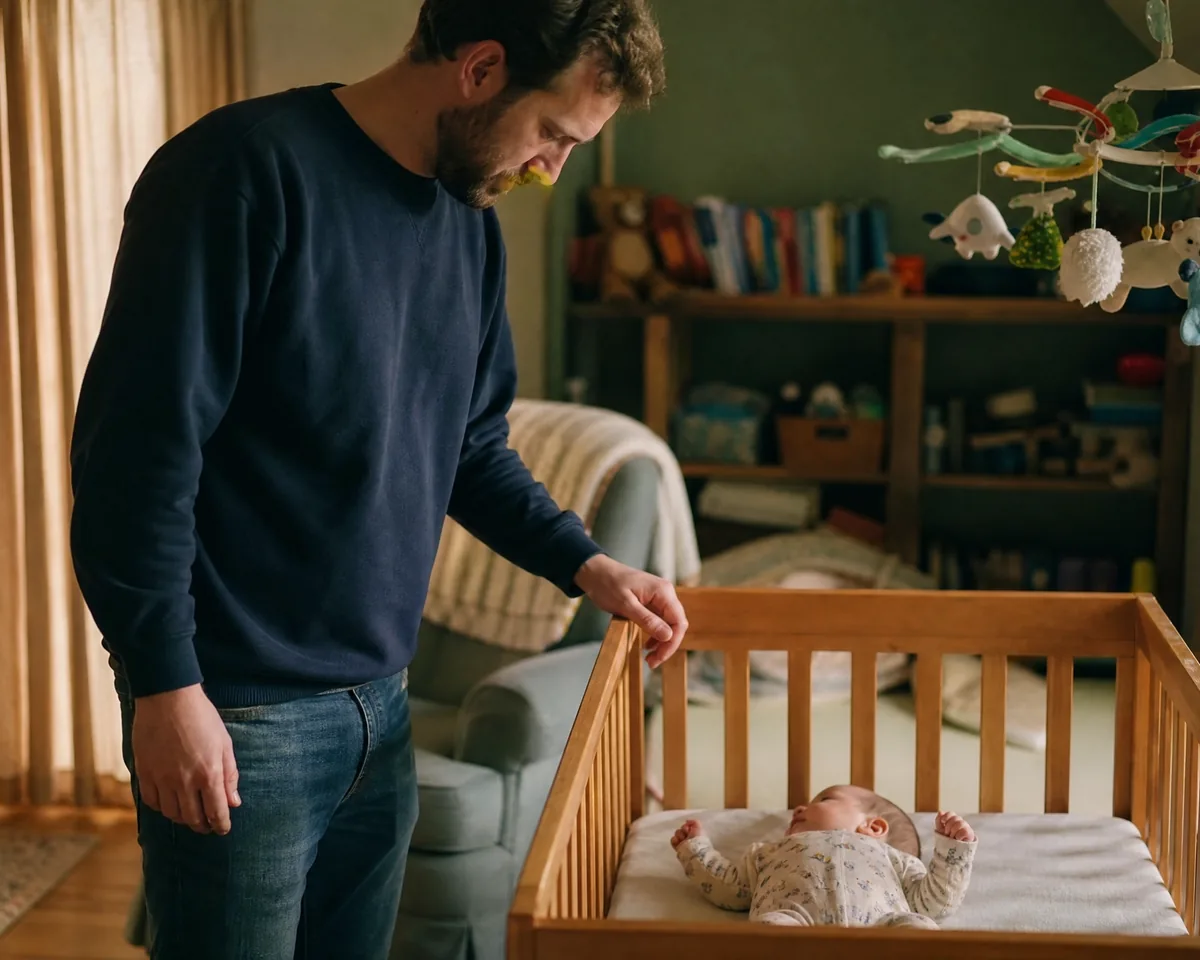
Tell it what happened last night and tomorrow changes. Regressions, teething, a week at your mum's, the clocks going back.

Every morning you tell it how the night went, in two taps. The schedule rebuilds itself before you're out of bed - and stretches on its own as your baby moves into the next age band. That last part is where most plans quietly stop working.
0 plans built · 0 this week
Most plans hand you a schedule and leave you to it. Within three days your baby has moved and the schedule is wrong. This one rebuilds every morning from what actually happened last night, and stretches by itself as they grow. It is the only part that reliably breaks, and it's the part we automated.
No. Extinction crying isn't the default, and if you tell us it's off the table, it stays off the table. There are slower routes and we'll say plainly how they differ in pace.
It's a plan for your nights. Some families use a structured settling approach, others don't, and the quiz asks which side of that you're on before anything is written. You choose the method; we build the schedule around it.
One payment for a fixed period - one, four or twelve weeks, from $21. Nothing renews and you are never charged again unless you choose to buy another period. You see the price at the end of the quiz, after you have seen the plan we would build. Every purchase has a 30-day refund, no questions asked.
The starting plan is built from your quiz answers - age, current wake pattern, feeding setup, room, who's on nights, your work. Then it changes weekly from what you log. Two families with same-age babies usually get different plans.
The quiz asks about all four. Night feeds stay if you want them. Cosleeping plans follow safe-sleep guidance and don't ask you to stop. Daycare naps get worked around rather than fought. For reflux, allergies, or anything being followed medically, your paediatrician's advice comes first and the plan is built to sit alongside it.
Babies vary and we won't pretend otherwise - nobody can promise you a date. Many families see the first steadier stretch inside the first fortnight; some take longer, and some go backwards for a few days before it settles.
Yes. Every plan has a share link that shows tonight in plain language - times, order, what to do at a wake. No account needed to read it, and nights can be split between two people on purpose.
Under two minutes. One glance in the morning, one log at night. No spreadsheets, no timing every nap to the minute - that kind of tracking makes most parents feel worse.
Four months to three years. Under four months you'll get a gentler newborn-rhythm plan instead, focused on your own rest and daytime light - not on stretching nights.
Safe sleep
Every plan is built to stay inside published infant sleep and safe-sleep guidance.
Guidance we follow
A few minutes of questions about your baby and your household. You'll see your first-week outline at the end.
Take the 3-min quiz →From $21, one payment. 30-day refund, no questions asked.